
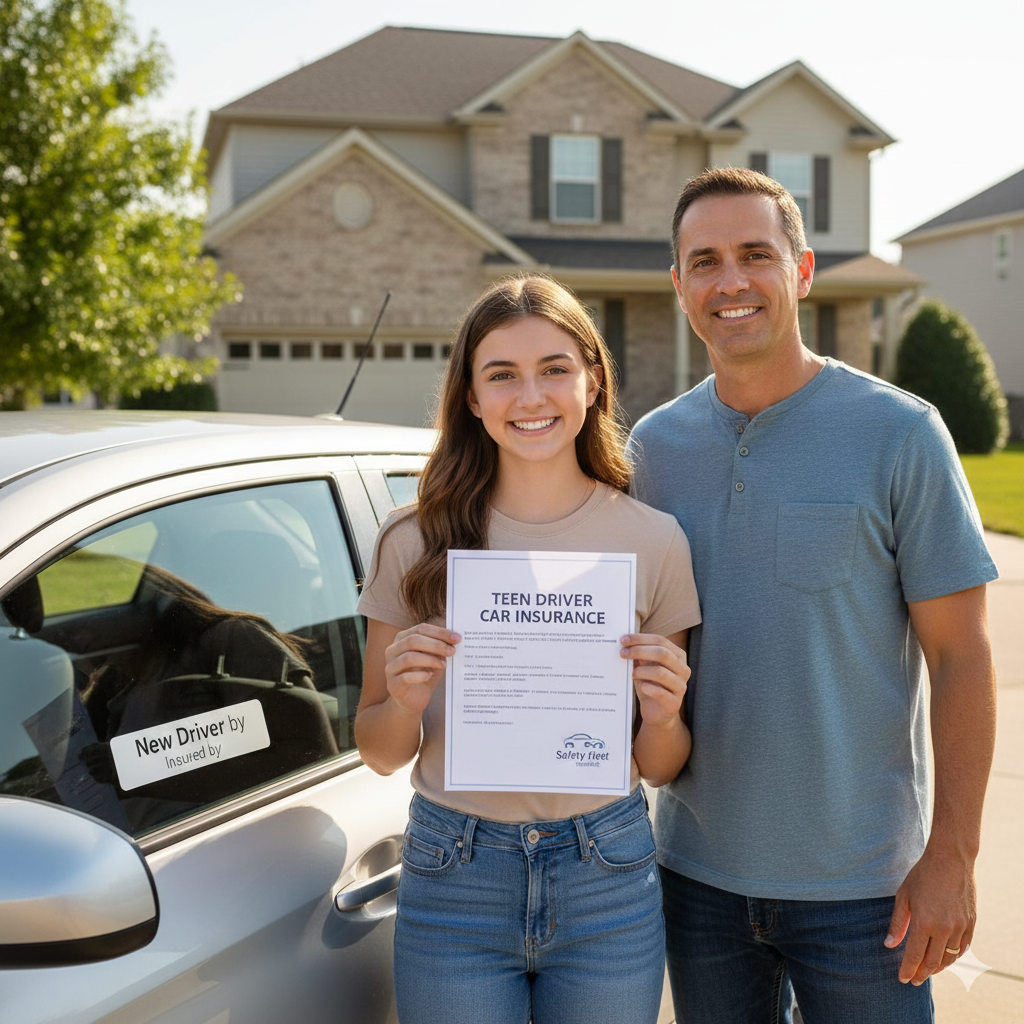
Car insurance for teen drivers can feel like a jump scare for your bank account. One minute your kid passes the driving test, next minute your insurance bill looks like a second rent payment.
The bad news: yes, car insurance for teen drivers is genuinely more expensive.
The good news: there are smart ways to bring it down without destroying your coverage or your sanity.
In this guide, we’ll break down:
- Why teen car insurance costs so much
- What actually affects the price
- Simple, practical ways to save money (without cutting everything to the legal minimum)
Table of Contents
Why Is Car Insurance for Teen Drivers So Expensive?
Insurers aren’t just being mean — they’re looking at risk.
Studies consistently show that teen drivers have much higher crash rates per mile driven than older drivers. Teens are more likely to make basic mistakes, drive distracted, and take risks like speeding or late-night driving.
From an insurance company’s point of view, teen drivers are:
- Inexperienced – they simply haven’t seen enough weird stuff on the road yet
- More likely to take chances – phones, music, friends shouting in the back
- Driving at risky times – nights, weekends, after school, social events
More risk = more claims = higher premiums. That’s the whole business model.
How Much Does Car Insurance for Teen Drivers Usually Cost?
There’s no single number, but you can safely assume this:
Insuring a brand-new teen driver is usually 2–4x more than insuring a 30-something with a clean record.
Some families see:
- A big jump when they add a 16–17 year-old to their policy
- Even higher costs if they put the teen on their own separate policy
- Extra pain if the teen is driving a newer car that needs full coverage
The exact price depends on your country, state, insurer, vehicle, and coverage choices — but yes, the “sticker shock” is real.
What Makes Teen Driver Insurance So Pricey?
Let’s break down the main ingredients in this expensive soup.
1. Age and Inexperience
Teens are new to:
- Heavy traffic
- Bad weather
- High-speed roads
- “Oh no that car is braking way faster than I thought” moments
Crash data shows teen drivers have significantly higher crash and fatal crash rates per mile than older drivers — especially right after they get licensed.
Insurers literally bake this into the price.
2. Risky Behavior (Even If Your Kid Is an Angel 😇)
On average, teens are more likely to:
- Speed
- Drive distracted (phones, music, friends, food, you name it)
- Skip seatbelts
- Drive late at night or with multiple teen passengers
Those combinations are exactly what show up in serious crash stats, so insurance companies treat teen drivers as a high-risk group from day one.
3. The Car Itself
The car your teen drives matters just as much as the fact they’re a teen:
- Sporty or performance cars = “please crash me” energy in insurer models
- Very old cars = fewer safety features, higher fatality risk
- Expensive cars = higher repair and replacement costs
Newer cars with good safety ratings and modern tech tend to protect people better in crashes, which is why safety-focused models can be cheaper to insure long term. nypost.com+1
4. Coverage Level
Many families don’t want to stick a teen in a bare-minimum liability policy, especially if they’re driving a newer car.
You might have:
- Higher liability limits
- Collision coverage (repairs for your car if the teen causes a crash)
- Comprehensive coverage (theft, storms, vandalism, etc.)
The more protection you add — and the lower your deductibles — the more the premium goes up. For teen drivers, collision and comprehensive are usually extra expensive because they’re more likely to make a claim.
5. Where You Live
Location affects:
- How many crashes happen near you
- Medical and repair costs
- How often people sue after accidents
Some cities and states just have high baseline auto insurance costs — and putting a teen into that mix multiplies it.
Is It Better to Add a Teen to a Parent’s Policy or Get Their Own?
Most of the time, the cheaper move is:
Add the teen driver to a parent’s existing auto insurance policy.
Why that usually wins:
- You often get multi-car and multi-policy discounts
- The parent’s stable insurance history helps
- It’s easier to manage everything under one account
A separate teen-only policy might make sense if:
- They live apart most of the year (different address / state)
- There’s a specific legal/ownership reason the policy has to be in their name
But in most “family household” setups, one shared policy is the value play.
10 Ways to Save Money on Car Insurance for Teen Drivers
You can’t change their age, but you can absolutely optimize everything else.
Here’s a practical checklist parents and teens can actually follow.
1. Pick a “Boring” Safe Car
You want a car that says “responsible commuter,” not “Fast & Furious extra.”
Look for:
- Solid safety ratings
- Decent crash-test results
- A normal engine, not a high-performance rocket
- Modern safety features if possible (ESC, airbags, driver-assist tech)
A gently used, safety-focused sedan or small SUV often beats a flashy or very old car from both a safety and insurance perspective.
2. Add Them to Your Policy First
Before you let your teen go policy-shopping solo:
- Get a quote adding them to your existing policy
- Compare it to a separate teen-only quote
Nine times out of ten, the family policy will be cheaper once discounts are applied.
3. Ask for a Good Student Discount
A lot of insurers give discounts for good grades.
Common requirements:
- “B” average or higher
- Or certain GPA threshold
- Sometimes honor roll / dean’s list etc.
If your teen is putting in work at school, make your insurer acknowledge it in the premium.
4. Use Telematics / App-Based Programs
Many insurers now offer “drive tracking” programs that monitor:
- Hard braking and acceleration
- Time of day when driving
- Phone usage
- Overall mileage
If your teen drives like they actually want to keep their license (and the car), these programs can unlock meaningful discounts over time — and they give parents data, not just vibes.
5. Limit Nighttime and Passenger Chaos
Crash risk for teen drivers goes way up at night and with multiple teen passengers.
Family rules that legitimately help:
- No late-night driving for the first year or two
- One friend max in the car at the beginning
- No “party rides” and no designated-driver flexing until they have more experience
It sounds strict, but fewer crashes = cleaner record = better rates later.
6. Enroll Them in Driver Education or Defensive Driving
A state-approved driver education or defensive driving course can:
- Improve skills and confidence
- Sometimes qualify for an insurance discount
- Show that the family is actively managing risk, not just hoping for the best
Check with your insurer to confirm which courses they approve for discounts.
7. Adjust Deductibles Strategically
Raising collision and comprehensive deductibles can lower monthly premiums.
Just make sure:
- The family could actually afford that deductible if the car is in a crash tomorrow
- You’re not trading short-term savings for long-term financial pain
It’s a tuning knob, not a cheat code.
8. Keep Mileage Reasonable
If your teen isn’t commuting long distances:
- Log realistic annual mileage with your insurer
- Ask if low-mileage discounts are available
- Consider carpooling, buses, or ride-sharing for long repetitive trips
The less they drive, the fewer opportunities there are for something to go wrong — and some insurers reward that.
9. Bundle Everything You Can
If your family also has:
- Homeowners or renters insurance
- Multiple cars
Bundling everything with one company can unlock multi-policy discounts and help soften the blow of adding a teen.
10. Shop Around — Especially After the First Year or Two
Insurance companies don’t all treat teen drivers the same.
Smart move:
- Get quotes from multiple insurers upfront
- Re-shop after 1–2 years of clean driving
As your teen gains experience and keeps their record clean, it’s often possible to switch to a better deal.
Common Mistakes Parents Make With Teen Driver Insurance
A quick “don’t do this” list you can skim:
- Putting the teen in a high-powered or modified car
→ Looks cool, costs a fortune, and increases risk. - Underinsuring to chase the lowest monthly payment
→ One serious crash can blow through low liability limits quickly. - Letting the policy lapse
→ Gaps in coverage are red flags for insurers and can keep premiums high for years. - Not updating the policy when things change
→ New car, new address, new driving pattern — these all matter. - Ignoring their record after they turn 18
→ Tickets, DUIs, and at-fault crashes at this age are brutal for long-term insurance costs.
FAQs – Car Insurance for Teen Drivers
When do car insurance rates usually start to go down for teen drivers?
Rates often start to ease in the early 20s if the driver:
> Keeps a clean record
> Avoids serious violations and at-fault crashes
> Maintains continuous coverage
Age helps, but good behavior is what really moves the needle.
Is it cheaper if my teen gets their own car insurance policy?
Usually no. In most cases it’s cheaper to:
“Add your teen to an existing family policy”
because you can use multi-car and multi-policy discounts and benefit from your own insurance history.
Does my teen need full coverage or just liability?
It depends on the car:
> Newer or financed car → full coverage is usually required (and smart).
> Old, low-value beater → some families choose liability-only to save money.
The key question: “If this car were totaled tomorrow, could we replace it out of pocket?”
What happens if my teen gets a ticket or causes an accident?
Expect:
> Higher premiums at the next renewal
> The family policy to be affected, not just the teen
> In serious situations, some insurers may decide not to renew the policy
That’s why household rules and real coaching matter a lot early on.
Can my teen drive other family cars that aren’t ‘theirs’?
Usually, if all drivers in the household are listed on the policy, they’re covered to drive household vehicles. But you should always:
> Be honest with your insurer about who lives in the home
> Clarify how cars are used and by whom
Trying to “hide” a teen driver to save money can backfire badly in a claim.
Final Thoughts
Car insurance for teen drivers is expensive because the risk is genuinely higher — but it doesn’t have to be financial torture forever.
With:
- The right car
- Smart coverage choices
- Some fair but firm family driving rules
- And a bit of shopping around
…you can protect your teen, protect your wallet, and eventually graduate them into more normal adult rates.
Related Guides Business Insurance
- Insurance for Mobile Repair Business (Guide)
- Academy / Educational Institution Insurance (Guide)
- Mobile Repair Business Insurance (Guide)
- Business Insurance for Home-Based Business
- Business Insurance Hub (Start Here)
- Small Business General Liability Insurance(Guide)
- Needing an SR-22 Car Insurance after a DUI(Guide)