
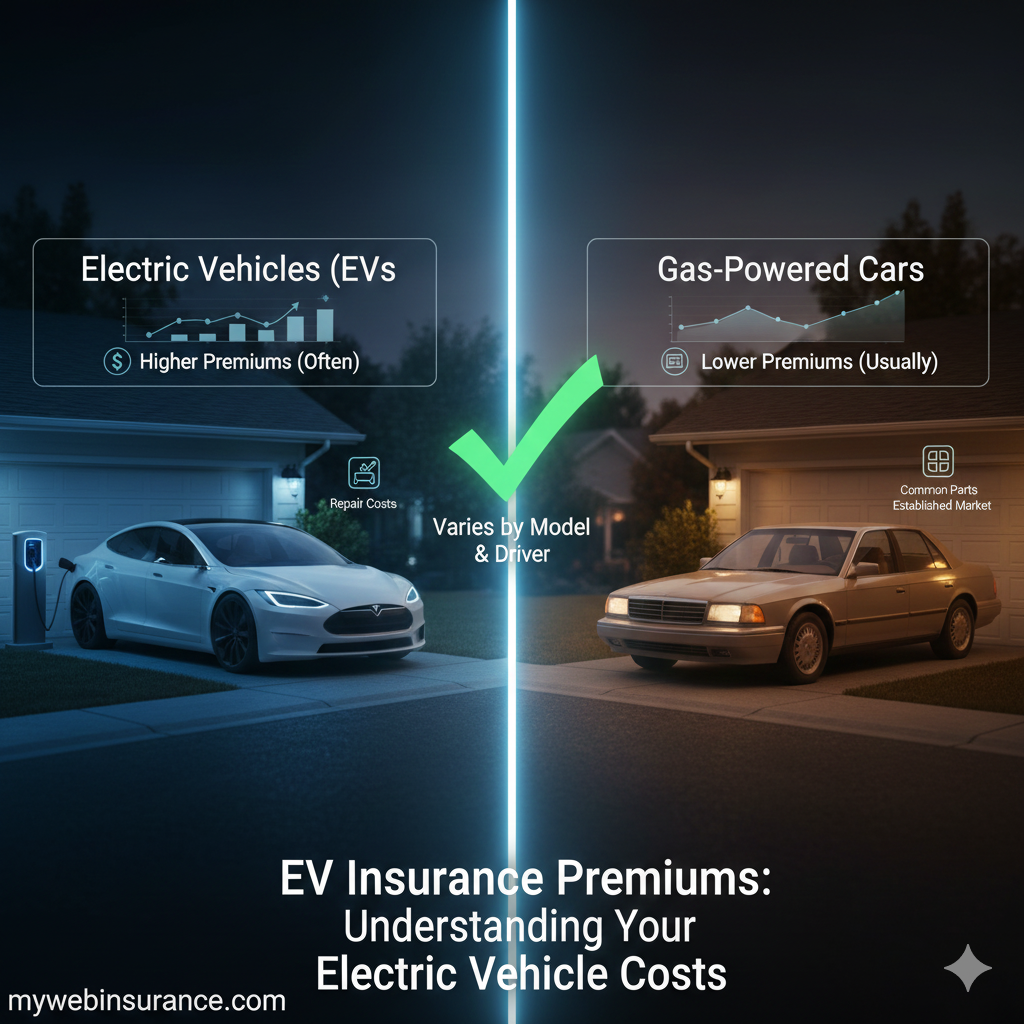
EV insurance premiums can be higher than insurance for comparable gas vehicles, but the gap depends heavily on your EV model, your location, your driving profile, and how expensive your vehicle is to repair. Instead of relying on one “average number,” it’s smarter to understand what insurers price (repair costs, parts availability, battery systems, and tech sensors) and then use that knowledge to shop and reduce your rate.
This guide explains why EV insurance costs differ, the biggest pricing factors, and the most reliable ways to lower your EV insurance premium without sacrificing coverage quality.
Understanding EV Insurance Premiums
Auto insurance pricing is basically a risk + cost model:
- How likely a claim is (accidents, theft risk, traffic conditions)
- How expensive the claim is (parts, labor, calibration, repair time, rental car costs)
EVs can increase the “cost” side because repairs may require specialized parts and procedures, and certain models have higher replacement values.
Why Electric Vehicles Can Cost More to Insure
Here are the most common drivers of higher EV insurance premiums:
Higher replacement value
Many EVs have higher purchase prices and replacement values than comparable gas vehicles. That impacts collision and comprehensive pricing because the insurer may pay more to repair or replace the vehicle.
Specialized repairs and calibration
Modern EVs often include advanced driver assistance systems (ADAS), sensors, cameras, and integrated software. Even minor collisions can require calibration and specialized labor.
Battery system complexity
Battery packs are valuable and complex. Insurers may price for the possibility that some impacts lead to expensive diagnostics or replacement (depending on model and damage type).
Parts availability and repair network
If your EV model has limited local repair options, repairs can take longer. Longer repairs can increase rental reimbursement costs and overall claim severity.
“New tech” pricing effect
With evolving vehicle technology, insurers sometimes price conservatively—especially for models where repair-cost history is still developing.
EV vs. Gas Insurance: What’s Usually Different?
Instead of a strict “EVs cost X% more,” here’s the practical way to think about it:
EV insurance may be higher when
- the model has expensive parts or limited repair shops
- the vehicle has higher replacement value
- repairs often require calibration or specialized labor
EV insurance may be similar (or sometimes lower) when
- the EV has strong safety systems and lower claim frequency
- the model has widespread repair support and good parts availability
- the driver profile and location are low-risk
Factors That Affect EV Insurance Premiums
1) Make and model
Two EVs can price very differently even with the same driver.
- Higher-performance or luxury EVs often cost more to insure.
- Mainstream models with broad service networks can be more stable on pricing.
2) Trim level and options
More expensive trims and feature packages often increase repair and replacement cost. If your trim adds sensors, cameras, premium displays, or specialized components, your premium may reflect that.
3) Location (ZIP code matters)
Your area impacts:
- accident frequency
- theft and vandalism rates
- repair labor rates
- weather exposure (hail, storms, flooding risk)
4) Driver profile
The usual factors still matter:
- driving record (tickets, accidents, claims)
- age/experience
- annual mileage
- credit-based insurance score (where legally allowed)
- garaging/parking situation
5) Coverage choices
Premiums change dramatically based on:
- deductible amount
- liability limits
- comp/collision options
- rental reimbursement
- roadside assistance
Features That May Reduce or Increase Premiums
Insurance effects vary by insurer, but these trends are common:
Potential premium-decreasing features
- upgraded safety and ADAS packages
- anti-theft tracking features
- strong crash-test performance
Potential premium-increasing features
- expensive sensor suites and displays
- specialized body materials
- limited repair support in your area
How to Lower Your EV Insurance Premiums
These are high-confidence, practical tactics:
1) Compare multiple quotes
EV pricing varies a lot across insurers. Get 3–5 quotes with the same coverages so you compare fairly.
2) Bundle policies
Bundling auto + renters/home can reduce total cost and simplify claims.
3) Increase deductibles (strategically)
Higher deductibles usually lower premiums, but only do this if you can comfortably pay the deductible anytime.
4) Review optional coverages
Some drivers overpay for extras and underpay for liability protection. Keep liability strong, and tune optional perks and deductibles carefully.
5) Use telematics if you drive safely
Usage-based programs can lower premiums for smooth driving behavior.
6) Reduce annual mileage (if possible)
Less mileage can reduce risk and improve pricing with some insurers.
7) Improve parking/security
Garaged or secure parking can help versus high-theft street parking (varies by insurer).
EV-Specific Coverage Options (Optional)
Don’t add everything. Choose what fits your setup.
Charging equipment coverage
Check whether your home/renters policy covers EV charging equipment or whether your auto insurer offers an add-on.
EV endorsements
Some insurers offer EV-focused extras. Read the terms carefully—some are narrow.
Roadside assistance for battery depletion
Confirm how roadside assistance handles EV depletion or towing.
Future Trends in EV Insurance
Expect:
- more accurate pricing as EV repair/claim data grows
- stronger differences by model (rather than a blanket “EVs cost more”)
- increasing impact of repair network and parts supply
- deeper focus on calibration and sensor repair cost
FAQ: EV Insurance Premiums
Are EV insurance premiums always higher than gas vehicles?
Not always. EV insurance can be higher for some models and locations, but pricing varies widely by insurer, repair costs, and driver profile.
Does home charging increase insurance costs?
Home charging usually doesn’t directly raise your auto premium, but you should confirm whether your charging equipment is covered under home/renters insurance.
Why do some EV models cost much more to insure?
Typically due to repair complexity, parts costs, replacement value, sensor calibration needs, and limited repair networks.
Do EV insurance premiums go down over time?
They can, especially as the vehicle depreciates and your record stays clean—but repair-cost trends and parts pricing also matter.
What’s the fastest way to lower my EV insurance premium?
Shop multiple quotes with identical coverages, increase deductibles only if affordable, and bundle policies if it reduces total spend.
Related Guides Business Insurance
- Insurance for Mobile Repair Business (Guide)
- Academy / Educational Institution Insurance (Guide)
- Mobile Repair Business Insurance (Guide)
- Business Insurance for Home-Based Business
- Business Insurance Hub (Start Here)
- Small Business General Liability Insurance(Guide)
- SR-22 Car Insurance After a DUI (Guide)
Sources : Insurance Information Institute / U.S. Small Business Administration
Pingback: Home Based Business Insurance (2026): Best Coverage, Cost + Checklist
Pingback: Mobile Repair Business Insurance (2026): Best Coverage Checklist + Costs
Pingback: Academy Insurance for Educational Institutions (2026): Coverage + Checklist