
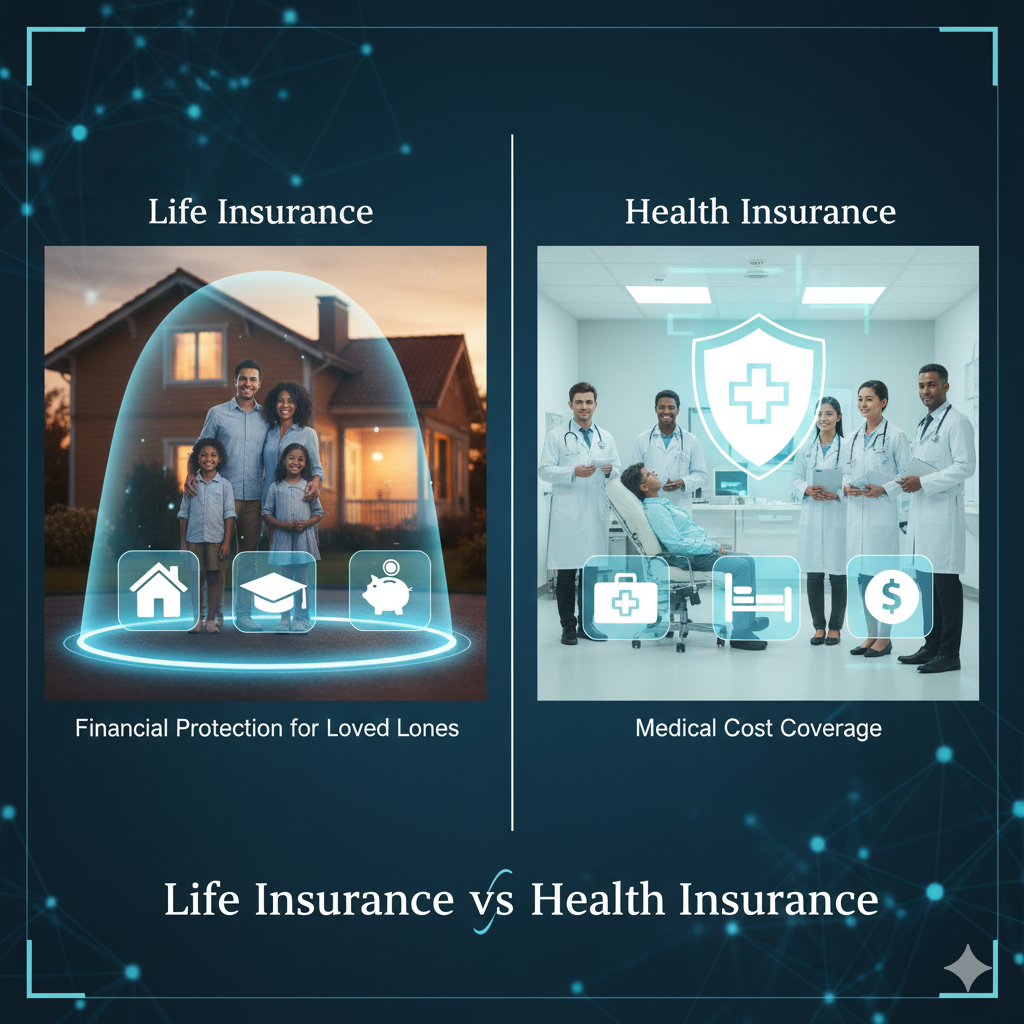
If you’re confused about life insurance vs health insurance, you’re not alone. They sound similar because both involve premiums and claims, but they protect you from totally different risks.
Here’s the quick truth:
- Health insurance helps pay for medical costs while you’re alive.
- Life insurance pays money to your beneficiaries if you die while the policy is active.
This guide explains the difference between life insurance vs health insurance in simple language, gives real-life examples, and helps your readers decide which one to prioritize first.
Country note: Coverage rules and costs vary by country and insurer, but the purpose of each type remains the same.
Part of our Life Insurance Hub >>
Table of Contents
What is health insurance?
Health insurance helps cover medical expenses such as:
- Hospital stays and surgeries
- Doctor visits and tests
- Medicines (sometimes, depending on plan)
- Emergency treatment
- Specialist care (depending on plan)
Some plans work through networks or approved hospitals/providers. Others reimburse expenses after you pay. The structure depends on your region.
What health insurance is best at
Health insurance protects your savings from big medical bills, which can happen suddenly—even to healthy people.
What is life insurance?
Life insurance pays a death benefit to your beneficiary if you die while covered. It’s designed to protect:
- your family’s income
- debt obligations (mortgage/loans)
- children’s education and living costs
- short-term stability and funeral expenses
Life insurance is less about “you” and more about the people who rely on you.
Life insurance vs health insurance: the key differences
| Feature | Health Insurance | Life Insurance |
|---|---|---|
| Who benefits | You (while alive) | Your beneficiaries (if you die) |
| Main risk covered | Medical bills | Loss of income due to death |
| When it pays | During illness/injury | After death (during coverage) |
| Claim type | Cashless/reimbursement | Death claim payout |
| Most important for | Everyone | People with dependents or debts |
Real-life examples for Life insurance vs health insurance (makes it super clear)
Example 1: You get hospitalized
You need surgery and a 5-day hospital stay.
- Health insurance may cover the bill (depending on limits and terms).
- Life insurance does nothing here because you’re alive.
Example 2: A parent passes away unexpectedly
A family loses its main income earner.
- Life insurance can pay a lump sum to support the family.
- Health insurance does nothing because it’s not for income replacement after death.
Example 3: Chronic illness impacts your finances
You need ongoing treatments and medications.
- Health insurance can reduce the financial burden.
- Life insurance only matters if you die while the policy is active.
Which should you buy first: life insurance vs health insurance?
The best answer depends on your situation, but here’s a practical priority framework.
Priority #1: Health insurance (for most people)
Health issues are common and expensive. Even if you’re young, medical emergencies can happen. Health insurance protects your future savings.
Buy health insurance first if:
- you don’t have strong medical coverage already
- your country’s healthcare costs can be high
- you can’t afford a big out-of-pocket medical bill
Priority #2: Life insurance (if someone depends on you)
Life insurance becomes a priority when your death would create financial hardship for others.
Buy life insurance early if:
- you have kids
- you have a spouse dependent on your income
- you support parents or family members
- you have shared debts (mortgage/loans)
- you are the main income earner
Reality: If you have dependents, it’s not either-or. You need both—just sized correctly.
How to decide quickly (simple checklist)
Use these questions:
- If I get hospitalized tomorrow, can I afford the bill?
→ If “no,” prioritize health insurance. - If I die tomorrow, does someone lose financial support?
→ If “yes,” prioritize life insurance (at least basic term cover). - Do I have loans that would hurt my family?
→ If “yes,” life insurance becomes more important. - Do I have employer coverage?
→ Great, but check limits and what happens if you change jobs.
Can you have both? (yes, and it’s normal)
Most financially stable families aim for:
- health insurance to protect savings during life
- life insurance to protect family income after death
They work together like a safety system: one covers medical shocks, the other covers income shocks.
Common misunderstandings (quick fixes)
- “Life insurance covers hospital bills” → Nope. That’s health insurance.
- “Health insurance supports my family if I die” → Nope. That’s life insurance.
- “If I’m young I don’t need health insurance” → medical bills don’t care about age.
- “Employer life insurance is enough” → often limited; consider topping up.
FAQ: Life Insurance vs Health Insurance
What is the main difference between life insurance vs health insurance?
Health insurance covers medical expenses while you’re alive. Life insurance pays beneficiaries if you die while covered.
If I can only buy one, which should I choose?
If you have no dependents, health insurance is usually the first priority. If you have dependents and debts, you may need both, starting with basic coverage.
Does health insurance cover death?
Some plans may offer limited death benefits or accidental cover (depending on country), but it’s not a substitute for life insurance.
Is term life insurance enough?
For many families, yes. Term life is often the most affordable way to get meaningful coverage.
Can one policy cover both life and health?
Some insurers sell combo products, but terms vary a lot. It’s usually clearer to compare separate policies.